
Common Terns on Chesil and Artificial Islands
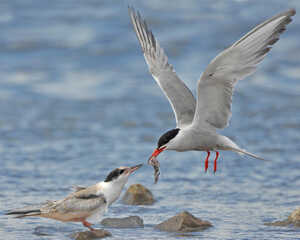
Common Terns have a long history of nesting on the Reserve. Each spring these elegant seabirds, sometimes known as Sea Swallows, return from their wintering grounds along the west coast of Africa to breed at Abbotsbury.
Historically, Common Terns nested along Chesil Bank alongside Little Terns. However, as numbers on Chesil declined, efforts were made to provide more secure breeding sites within the Swannery. To safeguard the colony and improve breeding success, the first Common Tern Island was constructed in 1982 on the eastern side of the Swannery embayment. Although this island later fell into disrepair, the main structure still stands. It is no longer suitable as a nesting area for terns but has since been adopted by Cormorants and now serves as a nesting platform for them.
In 1995, a replacement island was constructed, this time located on the western side of the Swannery embayment. Over the following decades, the colony experienced varying levels of breeding success, with nesting pair numbers ranging from 5 to 100 and total fledged chicks ranging from 0 to 145. In recent years, improvements to the nesting habitat and ongoing management have helped increase breeding productivity and support the recovery of the colony.
Managing a Changing Colony
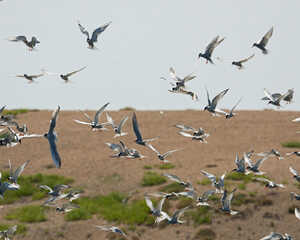
Improvements to the nesting habitat and ongoing management have helped increase breeding productivity and support the recovery of the colony. As a result, Common Tern numbers have grown steadily in recent years. This continued until 2016, when Black-headed Gulls were recorded nesting on the island for the first time. Since then, the gull population has increased annually, occupying the most favourable nesting areas and forcing Common Terns to nest around the island’s periphery. Although the terns have continued to breed successfully, increased competition for nesting space has led to a decline in their overall productivity.
In 2022, the island underwent a major refurbishment. The nesting area was enlarged, vegetation was removed, and anti-predator fencing was installed. The work initially proved successful, with Common Terns recording one of their most productive breeding seasons over the past few years. However, Black-headed Gulls continued to nest on the island and gradually reintroduced vegetation from the surrounding shoreline for nesting material.
The following breeding season, in 2023, both species were severely affected by a major outbreak of avian influenza, resulting in significant chick mortality before fledging. While both populations suffered losses, Black-headed Gulls appear to have recovered more rapidly in subsequent years, whereas Common Tern numbers have remained lower.
Creating Space for Common Terns
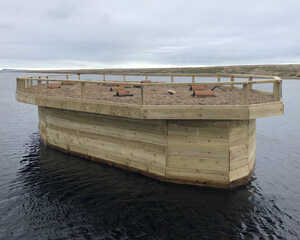
To help address the decline in nesting pairs caused by limited nesting space, the Weymouth District Wildfowlers Association kindly refurbished an old tern raft last year. The raft was originally built in 2002 and moored in the West Fleet in an effort to attract both Common Terns and Little Terns back to this area of Chesil. Despite the use of decoys and recorded calls, the project was unsuccessful at the time, and the raft remained unused for many years.
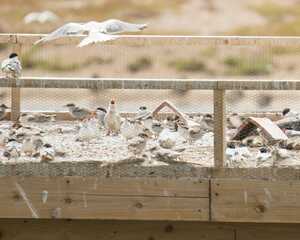
Following its refurbishment, Reserve staff moored the raft just east of Shipmoor Point in the West Fleet. The aim was to provide an attractive alternative nesting site for some of the Common Terns displaced from the island. Encouragingly, in its first year back in operation, one pair nested on the raft and successfully fledged three chicks, raising hopes that more birds would use the platform in future seasons.
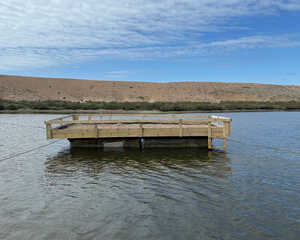
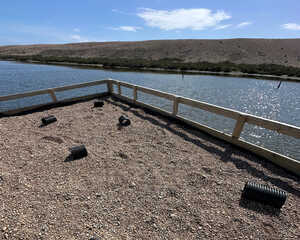
A Successful Second Season
The turnaround has been remarkable. After just a single pair nested on the raft in its first season, fifteen pairs successfully bred there in 2026, fledging at least ten chicks.
While Common Terns continue to face competition for nesting space, the success of the refurbished raft demonstrates how targeted conservation measures can make a real difference. With continued management and monitoring, we hope the colony will have the space it needs to thrive at Abbotsbury in the years ahead.
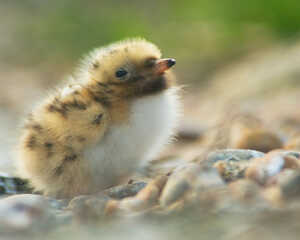
Table - Nesting pairs and chick productivity of Common Terns and Black-headed Gulls at Abbotsbury, 2020-2025, showing the impacts of island improvements in 2022 and avian influenza in 2023.
Black-headed Gulls
| Nesting pairs | Chicks fledged | |
| 2020 | 20 | 30 |
| 2021 | 25 | 50 |
| 2021 | 25 | 50 |
| 2023 | 20 | 2 |
| 2024 | 30 | 50 |
| 2025 | 50 | 100 |
| 2026 | 45 | 65 |
Common Terns
| Nesting pairs | Chicks fledged | |
| 2020 | 55 | 90 |
| 2021 | 25 | 20 |
| 2021 | 100 | 120 |
| 2023 | 100 | 20 |
| 2024 | 50 | 30 |
| 2025 | 50 | 60 |
| 2026 | 40 | 30 |
Posted on September 14th 2026
 Updating page...